
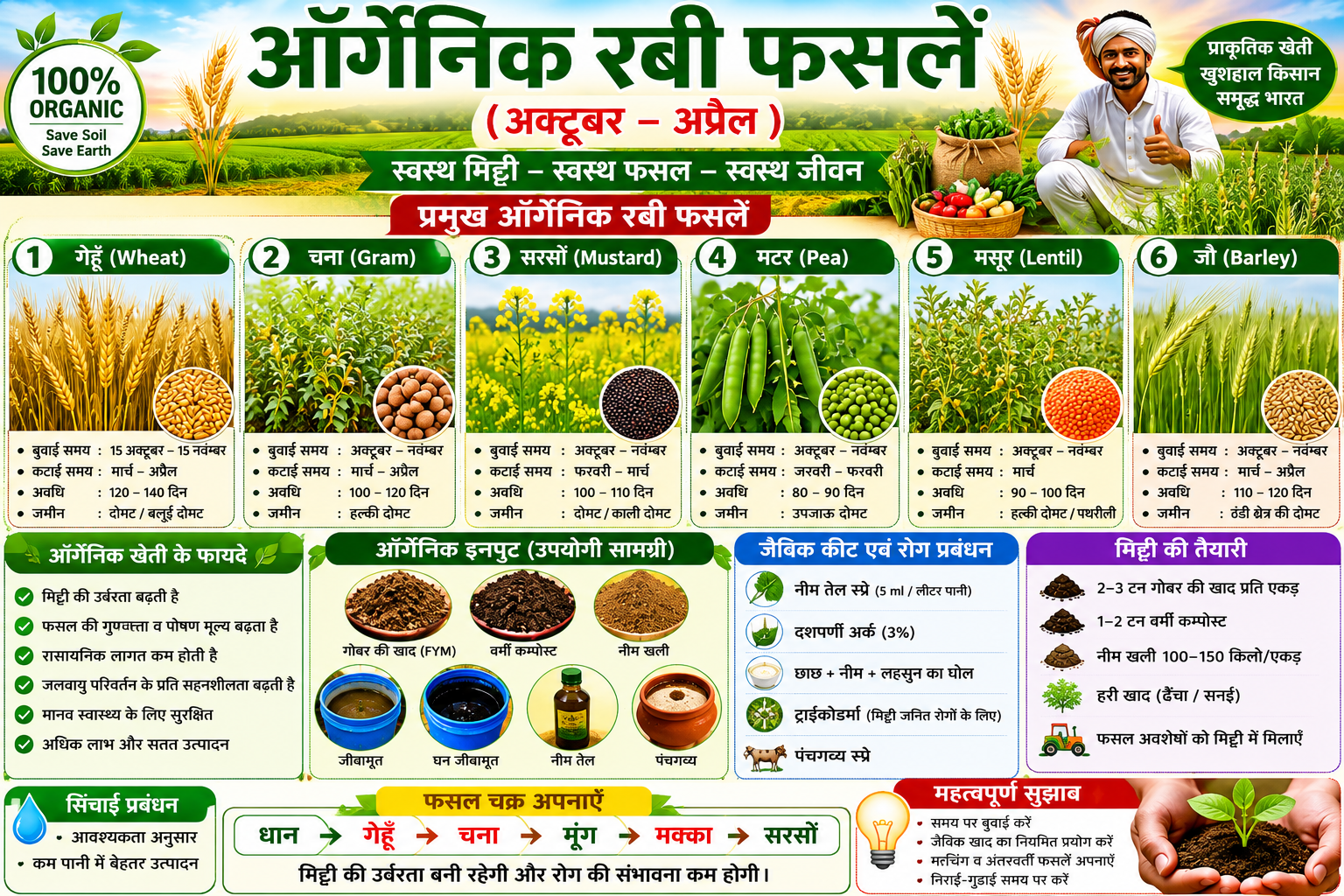
Organic Rabi Crops
Rabi crops are grown during the winter season. They are usually sown from October to November and harvested between March and April. In organic farming, natural fertilizers and eco-friendly pest control methods are used to produce healthy, chemical-free crops.
Top Organic Rabi Crops
| Wheat | |
| Mustard | |
| Chickpea (Gram) | |
| Barley | |
| Lentil | |
| Pea |
Sowing & Harvesting Time
| Crop | Sowing Time | Harvesting Time |
|---|
| Wheat | October – November | March – April |
| Mustard | October – November | February – March |
| Chickpea | October – November | March – April |
| Barley | October – November | March |
| Lentil | October – November | March – April |
| Pea | October – November | January – March |
| Oat | October – November | February – March |
| Linseed | October – November | February |
Organic Inputs
- Farmyard Manure (FYM)
- Vermicompost
- Compost
- Green Manure
- Neem Cake
- Jeevamrit
- Beejamrit
- Panchagavya
- Trichoderma
- Rhizobium Biofertilizer
- PSB (Phosphate Solubilizing Bacteria)
Seed Treatment
- Treat seeds with Trichoderma before sowing.
- Use Beejamrit for natural seed protection.
- Apply Rhizobium culture for legumes such as chickpea and lentil.
- Use PSB biofertilizer to improve phosphorus availability.
Irrigation
- Irrigate according to crop requirements.
- Avoid waterlogging.
- Use drip or sprinkler irrigation where possible to conserve water.
- Irrigate during critical growth stages for higher yields.
Weed Management
- Manual weeding
- Mulching
- Crop rotation
- Intercropping
- Mechanical weeding
Organic Pest and Disease Management
- Neem Oil Spray
- Neemastra
- Brahmastra
- Agniastra
- Yellow Sticky Traps
- Blue Sticky Traps
- Pheromone Traps
- Biological control agents
- Regular field monitoring
Benefits of Organic Rabi Farming
- Improves soil fertility and structure.
- Produces chemical-free, nutritious food.
- Increases beneficial microorganisms in the soil.
- Reduces environmental pollution.
- Conserves biodiversity.
- Improves water retention capacity.
- Reduces dependence on synthetic fertilizers and pesticides.
- Provides premium market value for organic produce.
- Promotes sustainable agriculture.
Best Crop Rotation
- Wheat → Green Gram
- Mustard → Green Gram
- Chickpea → Pearl Millet
- Lentil → Maize
- Barley → Green Gram
- Pea → Sorghum
Harvesting Tips
- Harvest crops at full maturity.
- Use clean harvesting tools.
- Dry grains properly before storage.
- Store produce in clean, dry, and pest-free conditions.
- Use natural storage methods such as neem leaves or botanical protectants.
Conclusion
Organic Rabi farming is a sustainable agricultural practice that enhances soil health, protects the environment, and produces safe, high-quality food. By using organic manures, biofertilizers, natural pest management techniques, and proper crop rotation, farmers can achieve long-term productivity and profitability while preserving natural resources.